

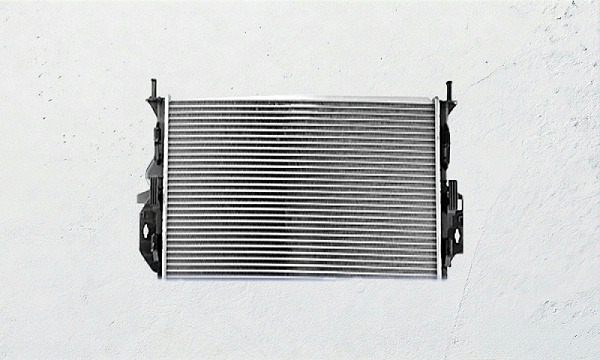
Whether it's the engine water cooling system of traditional fuel vehicles or the thermal management circuits of the power batteries and drive motors in current mainstream new energy vehicles, the radiator (commonly known as the water tank) is the core component for heat exchange. The radiator assembly is made up of an aluminum main plate, inlet and outlet water chambers, and sealing rubber strips. Before the finished product is rolled off the production line, an integrated leak detection must be conducted on the welding and connecting parts. This is a rigid process to ensure that the entire vehicle cooling system is free from leakage risks. As new energy vehicle models demand higher thermal management efficiency, the frequency of leak detection on the production line and the pressure on production pace have increased simultaneously, placing higher demands on the operational efficiency and reliability of the sealing connectors at the testing station.
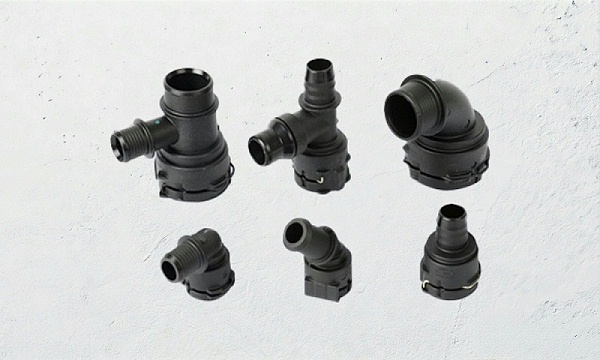
In the actual airtight testing station, the inlet and outlet configurations of the radiator assembly are not uniform. According to the commonly used VDA specifications in the automotive industry, common pipe orifices include flanged pagoda heads, grooved pipes with retaining slots, straight-through smooth pipes, etc. Different configurations of pipe orifices impose differentiated requirements on the adaptability of sealing joints. It is necessary to ensure tight sealing, while also avoiding scratching the pipe wall due to hard contact, and preventing leakage risks caused by poor mating between the sealing ring and such surface defects during final assembly.
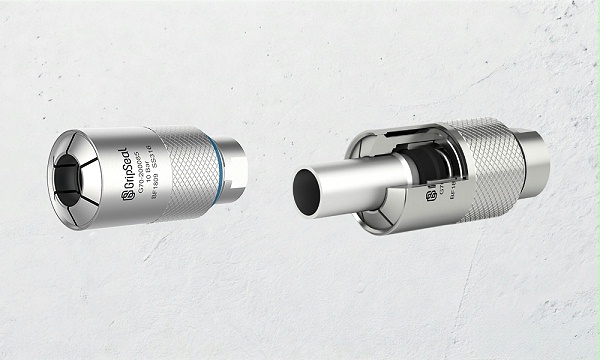
For flanged, irregular pipe ends or pagoda-style connectors, the GripSeal G70 series of external quick-seal connectors can be used. This series features a sliding sleeve push-pull design. The operator aligns the connector with the pipe opening and pushes it in with one hand, forming a stable sealing chamber with the internal claws and end face sealing rings to achieve instant connection. Its straight-through structural design minimizes flow loss, ensuring that the leak detector readings accurately reflect the state of the workpiece. The end face sealing rings, as wear parts, are easy to replace, facilitating routine maintenance on the production line. The knurled design on the outside of the housing increases hand friction, making one-hand operation stable and reliable.
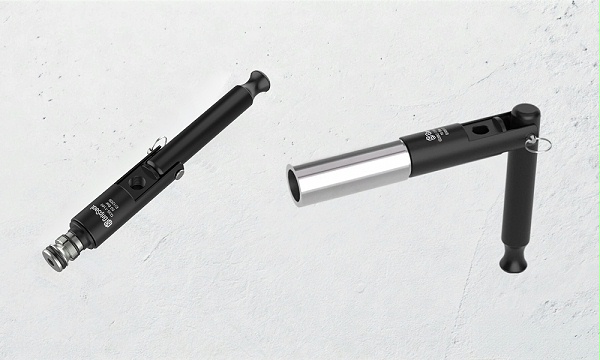
For radiators designed with straight-through tubes, or situations where operational interference near the tube ends makes it inconvenient to use external clamped connectors, the GripSeal G35 series of internally expanding quick-seal connectors can be used instead. The G35 relies on internal high-hardness claws to lock the tube wall, and a 90° folding handle is used to complete the connection. This series employs a pressure-assisted sealing principle, where the radial expansion force of the sealing ring increases simultaneously as the test pressure rises, ensuring reliable sealing even under high-pressure testing conditions. Its maximum pressure rating can reach up to 70Bar (depending on the material of the tube fittings), meeting the high-pressure air tightness testing requirements of radiator assemblies.
The combination of G70 series and G35 series covers different sealing scenarios at different positions in radiator manufacturing, such as the inlet and outlet main pipelines and bypass interfaces. Both series provide standard side G threads or ZG threads, facilitating quick connection of leak detector air supply pipelines on site without the need for additional adapters, simplifying the layout of testing stations.